AI Joke Generator Funny Tool or Comedy Thief in 2026
Ask an AI joke generator for something funny and you’ll usually get a decent pun. Ask who owns the jokes it learned from, and things get messy fast. This week that question stopped being theoretical. Comedians George Brett Olson and Julia Jasunas called out Instagram accounts run by AI-generated “comics” that performed their routines almost word for word, and Wired says it found eight affected performers. Meanwhile, the research on whether machines can be funny keeps piling up, and it doesn’t point in one direction. So before you paste a generated line into a toast, a caption or a stand-up set, it helps to know what these tools do well, where they quietly let you down, and what to do about it.
The Week AI Jokes Became a Copyright Fight
Reports from Wired, The Hollywood Reporter and Deadline on October 16 describe something odd. The accounts aren’t really inventing jokes. They take real clips, swap in an AI-made performer, and keep the material. Sometimes the backdrop and even the outfit stay too. Olson posted a side-by-side on October 3 showing his set next to an account with over 300,000 followers, and the only difference he pointed out was the punchline. Jasunas shared a similar case, with an account near 250,000.
It gets uglier. According to the coverage, several of these accounts steer viewers toward adult subscription pages, so the stolen laughs become a sales funnel for a woman who doesn’t exist. Instagram bans impersonation but not copying, and it lets AI content stay up if it’s labeled. The labels, apparently, come and go. Adam Mosseri told The Hollywood Reporter that banning AI content isn’t practical, but that Instagram would look at how to respond.
Why does this matter if you only want a birthday joke? Because the line between “generated” and “lifted” is thinner than most people assume. If something sounds suspiciously polished, somebody may have said it first.
Funnier Than You? Maybe. Funnier Than Everyone? Not Quite.
The headline result comes from a University of Southern California study in PLOS ONE, published in July 2024. Readers rated jokes without knowing who wrote them, and about 70 percent preferred ChatGPT 3.5’s to those from ordinary people. Roughly a quarter picked the humans. A few called it a draw. In a second round, the AI’s satirical headlines held their own against The Onion’s professional writers.
Then there’s a 2025 meme experiment from KTH Royal Institute of Technology, LMU Munich and TU Darmstadt. Memes made fully by AI scored higher on average than human ones. But the single funniest meme? Human, every time. Mixing people and AI didn’t improve things either, which surprised the researchers. A CHI 2026 paper from Barcelona adds a twist: an AI that joked openly about being an AI was rated funnier than a plain GPT version. Only 32 people watched, so I’d call it a hint and nothing more.
So the fair summary is that AI is reliably okay and rarely brilliant. Okay beats a lot of first drafts.
Why You Keep Getting the Same Joke
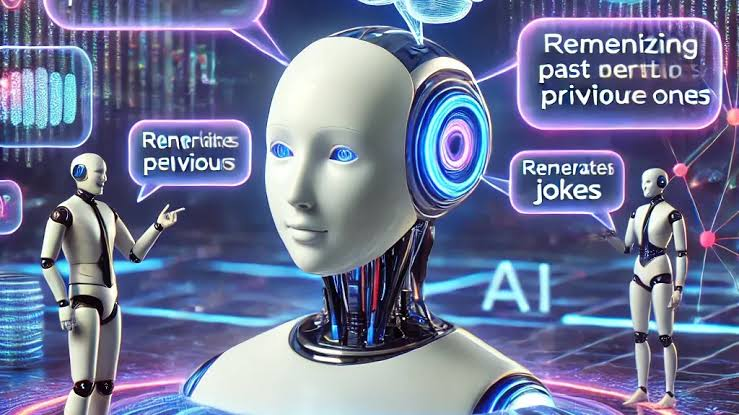
Anyone who has asked a chatbot for jokes more than twice has felt the repetition. Sophie Jentzsch and Kristian Kersting from Germany tested it properly: they asked ChatGPT 3.5 for a joke 1,008 times. Over 90 percent of the replies were variations on just 25 jokes. Only 99 were original, and about half of those borrowed pieces from existing ones.
That was an older model, so don’t treat it as the final word on today’s tools. Still, it explains why a lazy request like “tell me a joke” keeps pulling the same dad-joke material.
Better Prompts, Better Punchlines (and One Habit That Saves You)
Be specific. Instead of asking for a joke, say who’s listening and what you want: “three dry one-liners about airport security, for an office party.” Some tools bake this in. Punchlines.ai wants a setup from you and then offers punchline options. It was tuned on more than 10,000 late-night monologue jokes and gives a limited number of free tries per day. Apps like Joke Spinner turn one word into a pun, and others focus on dad jokes. When Niche Pursuits tried six generators, results were inconsistent, which sounds right to me.
Think of the first answer as clay, not a finished piece. Ask for ten versions, keep the best one, then request a shorter take with the punchline as the final word. And add something only you know, like a friend’s terrible habit or an old family running gag. No model has memorized that, so nobody else can have it either.
Now the habit. Before you post or perform anything, paste the line into a search engine with quotation marks around it. Thirty seconds, and you’ll know whether it’s out there already. After this week, getting called out for reposting somebody’s bit is far worse than telling a mediocre joke.
Quick Answers Before You Hit Generate
What’s the best free AI joke generator?
Depends what you need. Punchlines.ai suits people who already have a setup and want punchlines, with a daily free allowance. General chatbots handle odd topics and tone requests better. Testers have called dedicated joke sites hit or miss, so run the same prompt through two or three and compare.
Are AI-generated jokes original?
Not always. Research on ChatGPT 3.5 found most outputs recycled from a small pool, and newer models vary more but still lean on familiar patterns. A detailed prompt raises your odds. Searching the finished line is the only real check.
Can I use AI jokes in my stand-up or videos?
The legal side of AI-generated material is unsettled, and I’m not a lawyer, so check your platform’s rules and any venue contracts. Practically, treat output as a draft and rewrite it. Reposting a line that matches someone’s real act can get you accused of theft.
Why do AI jokes sometimes fall flat?
Models learn the shape of a joke without the timing, risk or personal truth behind it. They can build a neat setup and punchline and still miss the laugh. The best AI-assisted bits usually carry a heavy human edit.
So, Should You Use One?
Yes, as a brainstorming partner. An AI joke generator can beat the average amateur’s first attempt, and in a few studies it keeps up with professionals. It repeats itself, though, and it can’t invent the personal detail that makes people laugh. Use it for raw material, edit hard, and check what you’re about to say. This week showed how fast comedians, and their audiences, spot a copy.