Nitri-Tech Gloves 3 Different Products, 1 Name (2026 Guide)
Here’s what trips people up. You search for nitri tech gloves expecting one product, and Google hands you three or four that have nothing in common. Same name, different makers, completely different jobs. The timing is bad too, because nitrile is getting pricier. Top Glove released its FY2026 numbers this week, and raw nitrile went from about US$950 a tonne in August to US$1,100 in September. The company expects its own selling price to move from roughly US$20 to US$22-23 per 1,000 gloves. If you reorder nitri tech gloves regularly, work out which one you actually need before the next purchase order goes out.
Why Nitri Tech Gloves Aren’t Really One Glove
Nobody certifies something called Nitri-Tech. It’s a model name, and several companies picked it. A few of the pages ranking for nitri tech gloves just gush about “advanced nitrile” and never say who makes the glove or what it was tested against. That’s no help when you’re trying to buy.
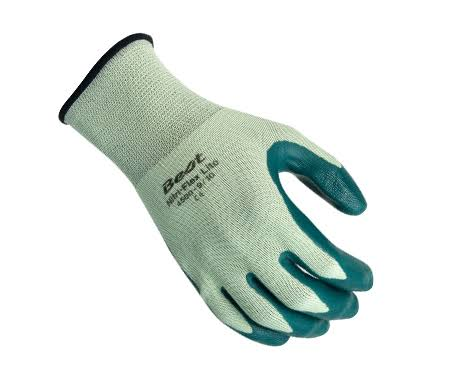
The real products are easier to pin down. OXXA makes a Nitri-Tech range of knitted work gloves: the 14-690, 14-692 and 14-695. You get nitrile foam on the palm and fingers over a thin 15-gauge nylon/spandex liner, no seams, and an elastic cuff. The 14-692 carries its coating three-quarters of the way up to the knuckles. The 14-695 adds little nitrile dots for extra grip. They’re black and grey, which makes sense for dirty workplaces where a pale glove would look wrecked within an hour.
Polyco went in another direction entirely. Its Nitri-Tech II is a reusable nitrile glove for strong detergents, oils and certain solvents, and the rubber has no latex protein in it. Then there’s Summit Glove’s NitriTech, which turns up in the FDA’s device database as a single-use exam glove. Powder-free, 4.5 mil, 9.5 inches long, blue, beaded cuff.
So the same name can get you a grip glove, a chemical glove or a disposable exam glove. Order the wrong one and you’ve wasted money.
Decoding the Numbers on the Cuff
If you want chemical protection, Polyco’s Nitri-Tech III is usually what people mean when they search nitri tech gloves. Polyco calls it the flagship nitrile gauntlet. It has a diamond-pattern grip and a flock lining inside. Its main rating is Type A under EN ISO 374-1, which means it was tested against at least six chemicals.
Read that carefully. Six tested chemicals is a list, and it says nothing about everything else you might spill. The letters for this glove are AJKLMNOPT, plus a virus marking. If your chemical is on the list, good. If it isn’t, go and find the manufacturer’s resistance guide instead of guessing.
The mechanical ratings are messier. One listing gives the Nitri-Tech III an EN 388 code of 4101X. An older listing from the 2003 version of the standard says 4002. And one retailer publishes cut and puncture levels that don’t match 4101X at all. Honestly, I wouldn’t trust any of them over the manufacturer’s datasheet. OXXA’s foam knit gloves are rated 4131X under the 2016 standard. Neither code suggests real cut protection, so keep these away from blades and broken glass.
One more warning. Fabory’s listing for the OXXA 14-690 says plainly that it gives no protection against chemical risk. It’s built for oily, greasy handling. A splash of solvent would go straight through it.
Prices Are Nudging Up. Here’s Why.
Start with Top Glove. Core net profit jumped five-fold to RM308 million, mostly because selling prices rose sharply in the second half of the financial year. But Kenanga’s analysts don’t think the 17% EBITDA margin will hold. They point to oversupply, a possible minimum wage rise and higher natural gas tariffs.
Tariffs matter as well. US duties on medical-grade gloves from China doubled from 50% to 100% in January, and nearly half of Malaysia’s glove exports go to the US. Even so, the blended cost of nitrile and butadiene is still about 10% above pre-Covid levels, so makers can’t raise prices as much as they’d like.
Most of this reporting covers medical gloves, and nitri tech gloves in the chemical or foam-knit categories won’t follow it exactly. They share the same raw material, though, so some upward pressure seems likely. For a rough sense of UK shelf prices, Cromwell lists the Nitritech III at £2.59 before VAT. Scott Direct has the Nitri-Tech II marked down from £2.21 to £1.84. Treat those as a snapshot, because they’ll move.
Which Nitri Tech Gloves Fit Your Job?
Think about what’s actually going to touch your hands. Oily parts, greasy tools, lots of fiddly handling? The OXXA foam knit is built for that. Its coating grips dry, greasy and oily objects, and the breathable back keeps your hands from sweating. Cleaning, degreasing, or working around detergents and oils? That’s where the Polyco III’s chemical rating earns its keep.
Food and sanitation work adds one more detail. The blue Nitri-Tech III is described as easy to spot in food settings, and Polyco publishes a food contact statement for the range. Patient exams are a different world altogether, and a single-use disposable like Summit’s is the right category there.
Before you buy nitri tech gloves, check three things. Who actually makes them? Which EN standards are printed on the cuff or datasheet? Is the glove reusable or single-use? That takes two minutes and saves you a box of useless gloves.
Questions People Keep Asking
Are nitri tech gloves latex-free?
Polyco’s are. The rubber is synthetic with no latex protein, so there’s no protein sensitisation risk from the material. For any other brand, read that brand’s datasheet.
Can I use them around food?
Polyco offers a downloadable food contact statement for the Nitri-Tech III. The OXXA product pages I checked don’t mention food use, so don’t assume it.
Are they disposable or reusable?
It depends on the maker. Polyco’s II is reusable, OXXA’s are reusable work gloves, and Summit’s NitriTech is single-use.
Will prices keep going up?
In the short term, probably. Top Glove expects higher selling prices, but analysts also warn about oversupply and margins that can’t last, so I wouldn’t bet on a long climb.
The Short Version
The name tells you almost nothing. Find out who made the glove, check its standards against your real hazard, and expect firm nitrile prices over the next few months. Buy from the datasheet and ignore the label.